Quick identification facts
Indoor Evidence Checker
Use this checklist to evaluate physical signs of brown recluse activity in your home's storage spaces.
Where Do Brown Recluse Spiders Hide Indoors?
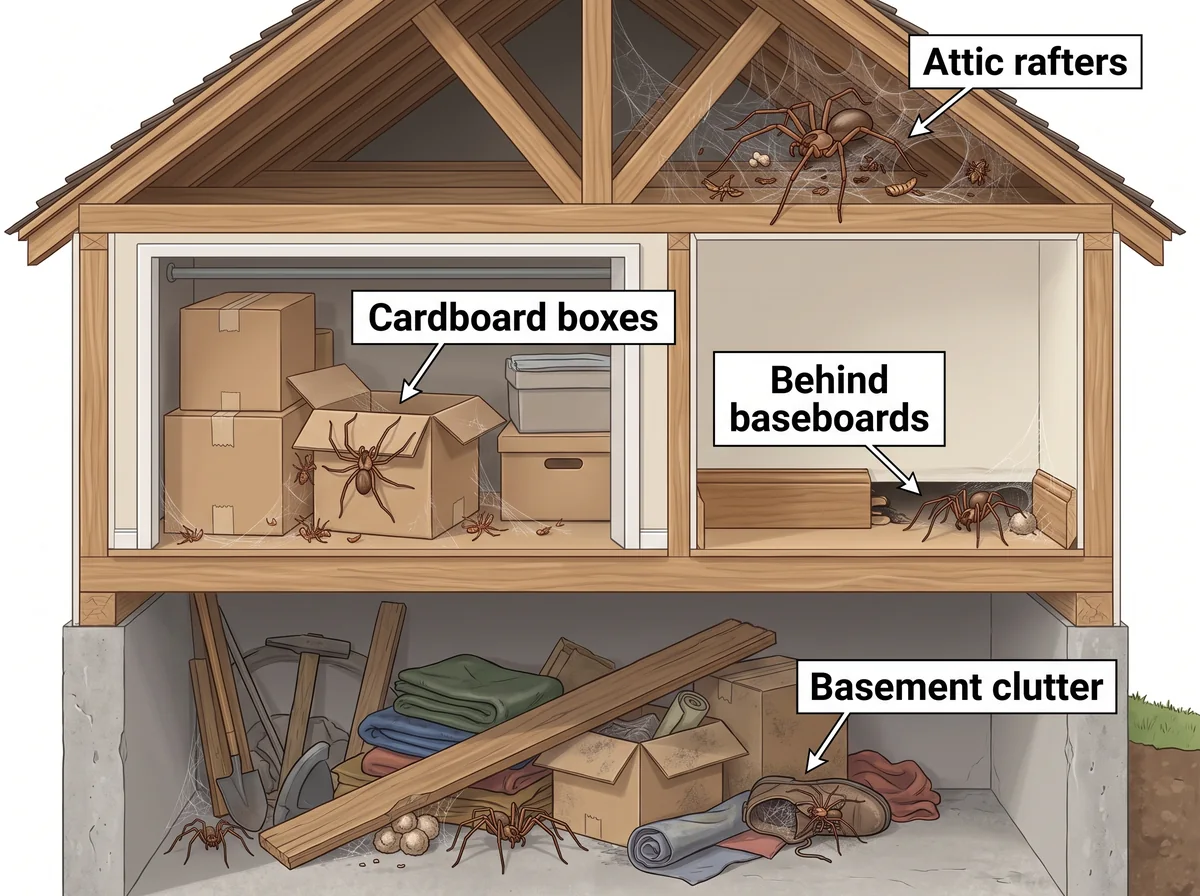
Inside a home, brown recluse spiders seek out quiet, dark spaces that experience very little foot traffic. Attics and basements provide ideal shelter because they often house cardboard storage boxes, loose insulation, and quiet wall corners where spiders can rest without disruption. You will rarely see them resting out in the open during the day, as they prefer tight crevices.
Closets, crawl spaces, and under-stair storage areas also offer comfortable daytime harborages. When you store clothing, folded blankets, or stacked paper goods for months at a time, you create small sheltered hollows that match their sheltering preferences. Spiders slide into the gaps beneath box flaps or behind items pushed directly against exterior walls.
They remain tucked away in these dark voids throughout daylight hours to avoid light and movement. Because these hiding spots are usually cool, dry, and undisturbed, an active population can go unnoticed for long periods unless you actively move stored belongings and inspect the floorboards around them.
You can check the same detail against Brown Recluse Habitat and Range: Where Does It Live?.
What Do Their Webs Look Like?
Brown recluse webs do not look like the neat, circular wheel patterns made by classic garden spiders. Instead, their silk structures appear messy, dense, and completely irregular. When you shine a flashlight along baseboards or behind furniture, look for off-white, tangled sheets of silk that seem disorganized rather than carefully geometric.
These irregular webs are typically built close to the ground or flat against an interior wall in secluded spots. You might notice them stretched across floor corners, tucked underneath low shelving, or spun between stacked boxes. The silk serves primarily as a daytime retreat rather than an aerial snare designed to catch flying prey.
Because the webbing stays low and sheltered, it gathers dust easily in basements and storage rooms. If you spot scattered, tangled thread patches along lower wall junctions or in floor gaps, you may be looking at active or abandoned retreat webs that warrant a closer inspection of the surrounding perimeter.
You can check the same detail against Signs of Brown Recluse Infestation: What Should You Look For?.
To compare this detail with another source, Insectio’s signs of brown recluse infestation page offers a useful cross-check.
How Do Shed Skins Signal Their Presence?
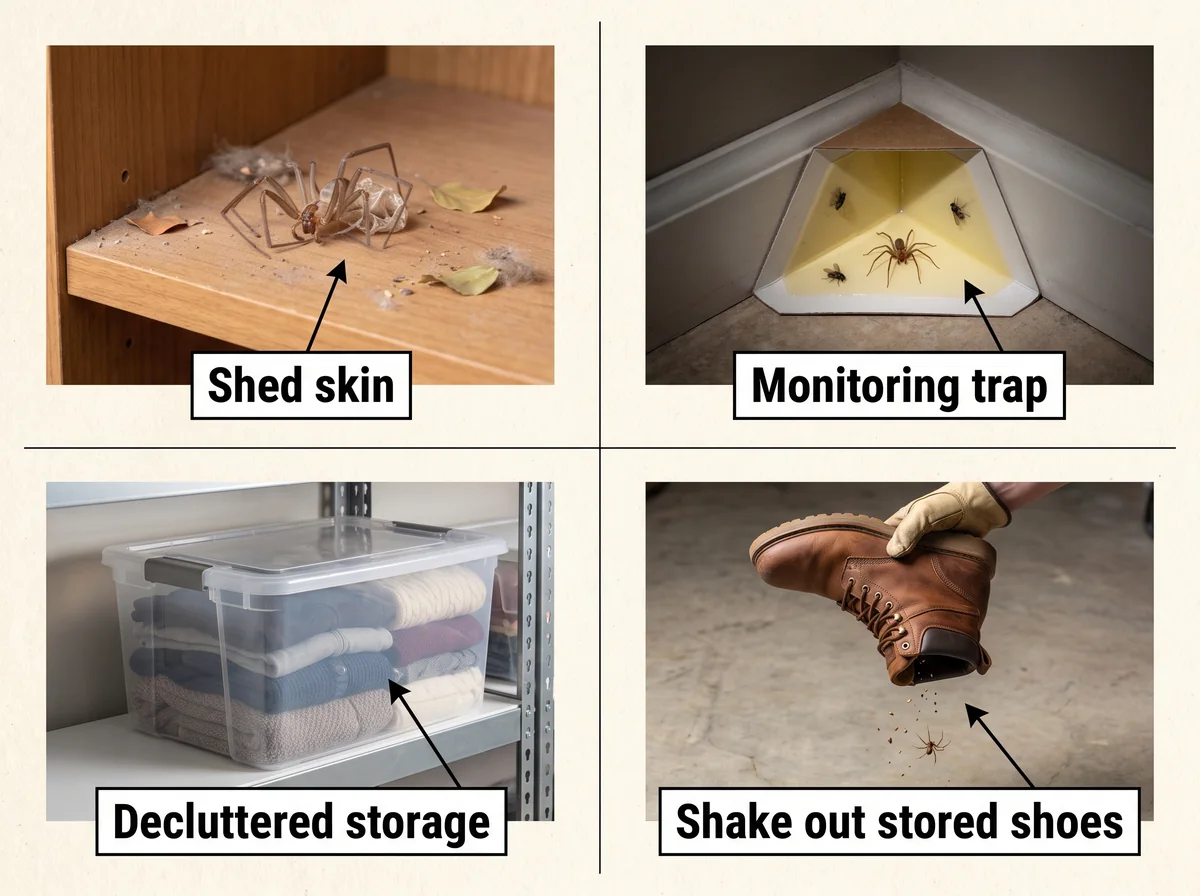
As brown recluse spiders grow, they regularly molt and leave behind their rigid outer coverings, known as shed skins or exuviae. Finding intact shed skins in quiet, undisturbed areas of your home can indicate an established, reproducing population. Unlike the spiders themselves, these cast-off shells stay in place and provide visible physical evidence of past activity.
You can inspect shed skins closely without handling a live spider. Look for these hollow casings on the tops of stored boxes, inside closet corners, along basement joists, or behind structural baseboards. Because the skin hardens in the spider's resting posture, it often retains the full shape of the legs and the head region.
Examining a shed skin can give you the first visual clues about the creature that left it. You can check the overall outline and even inspect the head section under good lighting. Discovering multiple molts across different rooms suggests spiders have lived and grown inside the building across successive life stages.
You can check the same detail against Brown Recluse Web Identification: What Does It Look Like?.
When Are You Most Likely to Spot Them Moving?
Brown recluse spiders are nocturnal hunters that become active mainly at night. While they stay concealed in hollows and crevices during bright daylight, they emerge after dark to search for food along floor edges and across open floorboards. You are far more likely to encounter one roaming across a rug or hallway after switching on a late-night light.
Their nighttime wandering means they occasionally crawl into shoes, laundry piles, or folded bedding left sitting on the floor overnight. When morning arrives, wandering individuals look for the nearest dark crevice to hide, which can accidentally place them inside everyday household items that you move the following day.
If you must search storage spaces, doing so with a flashlight can reveal movement along baseboards where walls meet the floor. Observing their nighttime routes helps you pinpoint which quiet rooms or crawl spaces serve as the primary daytime base for their activity.
A related clue is covered in Brown Recluse Life Cycle: How Does It Develop?.
How Can You Safely Capture a Specimen for Identification?
Never attempt to pick up or press down on a suspected brown recluse spider with your bare fingers. If you find an active spider resting on a flat surface, place an open, clear glass or plastic jar over it to trap it safely. Then, slide a stiff piece of cardboard gently underneath the opening to seal the container.
Once the spider is secure inside the jar, tape the cardboard firmly in place or screw on a secure lid. This simple catch method keeps the body intact so you can view diagnostic features clearly without damaging the head or legs. Avoid smashing the specimen, as crushing destroys the subtle markings needed for accurate confirmation.
Positive identification of a suspected brown recluse requires checking the eye arrangement, ideally with magnification. You or an entomologist can inspect the trapped specimen through the transparent walls of the jar, using a magnifying glass to check whether it possesses six distinct eyes arranged in three pairs.
For another part of the identification, open Brown Recluse Egg Sac: What Does It Look Like?.
Related identification guides
Brown Recluse Habitat and Range: Where Does It Live?
learn geographic range and native habitat
life cycleBrown Recluse Life Cycle: How Does It Develop?
understand developmental stages and timing
signsSigns of Brown Recluse Infestation: What Should You Look For?
determine whether multiple spiders/an established population is present, and next steps
signsBrown Recluse Web Identification: What Does It Look Like?
identify a spider by its web structure
Frequently asked questions
Can I confirm a brown recluse just by finding a messy web in my attic?
No. While brown recluse spiders build messy, irregular webs low to the ground or against walls in secluded spots, many other harmless indoor spiders produce tangled silk. Positive identification requires examining physical traits on the spider itself, particularly the presence of six eyes arranged in three pairs, rather than relying on web structure alone.
Where should I look first if I suspect brown recluses are in my basement?
Focus your search on undisturbed perimeter areas where clutter rests against the foundation. Check along dark baseboards, behind stacked cardboard storage boxes, under low wooden shelving, and inside quiet wall crevices. Use a bright flashlight to look for tangled silk webbing or rigid shed skins left behind in floor gaps.
What does finding a shed skin tell me about my home?
Finding shed skins (exuviae) in quiet, dark storage areas indicates that a spider has molted and grown inside your living space. When you discover multiple shed skins in attics or closets, it suggests an active brown recluse population may be established nearby, as these cast-off coverings accumulate in undisturbed daytime shelters.
Why do brown recluse spiders choose cardboard boxes over other indoor spaces?
Cardboard boxes provide narrow, dark, and dry crevices that mimic natural sheltering hollows. The corrugated gaps, loose flap folds, and undisturbed interiors of stored boxes offer excellent daytime protection from light, household traffic, and larger predators, making long-term storage areas in basements and attics their preferred indoor habitat.